 Adapting genres, Cervantes created two new ones: realism and metafiction, says Robert Alter in Partial Magic (1979). The “juxtaposition of high-flown literary fantasies with grubby actuality” established realism, while the “zestfully ostentatious manipulation” of the artifice of literary creation set precedent for “all the self-conscious novelists to come” (Alter 3 – 4). Realism and metafiction were born on the same day and became, almost immediately, rivals. Metafiction is the elder brother, however, since realism was a metafictional technique Cervantes created to parody the conventions of romance. Most fiction since Cervantes, says Alter, can be classified under one of these two headings.
Don Quijote: The Impossible Truth
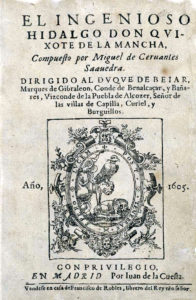 Don Quijote de la Mancha is the impossible truth: the book is a fiction, a lie, and yet it is true. Truer than a non-fiction biography of Cervantes. We would only read such a bio because we love our mad knight-errant and his earthy squire, Sancho Panza. The novel tells us much more about the real Cervantes than any bio could every do: valet, soldier, ransomed by pirates, soldier, tax collector, convict (jailed for discrepancies in the accounts while tax collector), poet, playwright, and the first modern novelist.
A Realistic Story of a Little Girl with Dimples
Is this a realistic narrative? A little girl with dimples and pink ribbons gets the puppy she wanted for her birthday, even though her mother has said they couldn’t afford it. The girl wraps her pudgy arms around her mom’s neck and whispers, “Thanks, Mommy-cakes. I love you so much.”
Not very realistic? Why not? Such things don’t happen? Or does the tale sound like the type of story that makes people smile and feel good. It may be “heart-warming,” but it isn’t what we call “realistic.”
Take a moment and imagine a more “realistic” version of this story. Feel free to change it in any way you like, as long as it retains the little girl with dimples, her mom, and the puppy.