Metamusic and Metasongs: Music about Music, Songs about Songs

Metamusic is music about music: songs that reference themselves, the singer, other songs, other singers, musical instruments, the process of writing or recording a song, the music industry, or anything else that is related to music.

You’d think that the world would have had enough of silly meta-songs. I look around me and see it isn’t so. Singers love to sing about singing!

In the first half of this post, we’ll look closely at some passages from metasongs, examining what makes them meta. In the second half, I present a longer list of metamusic for you to explore. Whenever possible, I have linked to the song on YouTube, preferably a music video. Most songs are available on Spotify and Pandora.

Bad Music by Blectum from Blechdom

The singer of this soulful meta-song, Kevin Blechdom, slips in and out of tune, as she sings about bad music. (Click on the link and listen to it as you read). 

“There’s bad music everywhere. There’s bad music everywhere. There’s bad music in the air.”

Continue reading

How Language Speaks You

Recently, researchers have been looking again into the ways different languages affect how we think. Benjamin Lee Whorf proposed the idea 1956 in M.I.T.’s Technology Review and the theory became quite trendy, until closer examination revealed that he had little research to back up his claims and some of his generalizations were just too broad to accept. For example, he said that if we were missing a word in our language, then we couldn’t grasp the concept. Although we don’t have the word Schadenfreude in English, we can easily understand the idea: delighting in others’ misfortunes. We get it, but perhaps we think less of this perverse delight, than Germans.

In “Does Language Shape How You Think?” an article in the New York Times Magazine, Guy Deutscher argues, “When your language routinely obliges you to specify certain types of information, it forces you to be attentive to certain details in the world and to certain aspects of experience that speakers of other languages may not be required to think about all the time. And since such habits of speech are cultivated from the earliest age, it is only natural that they can settle into habits of mind that go beyond language itself, affecting your experiences, perceptions, associations, feelings, memories and orientation in the world” (Deutscher 45).

Continue reading

The Danger of Meta: Centre George Pompidou and David Foster Wallace’s “Octet”

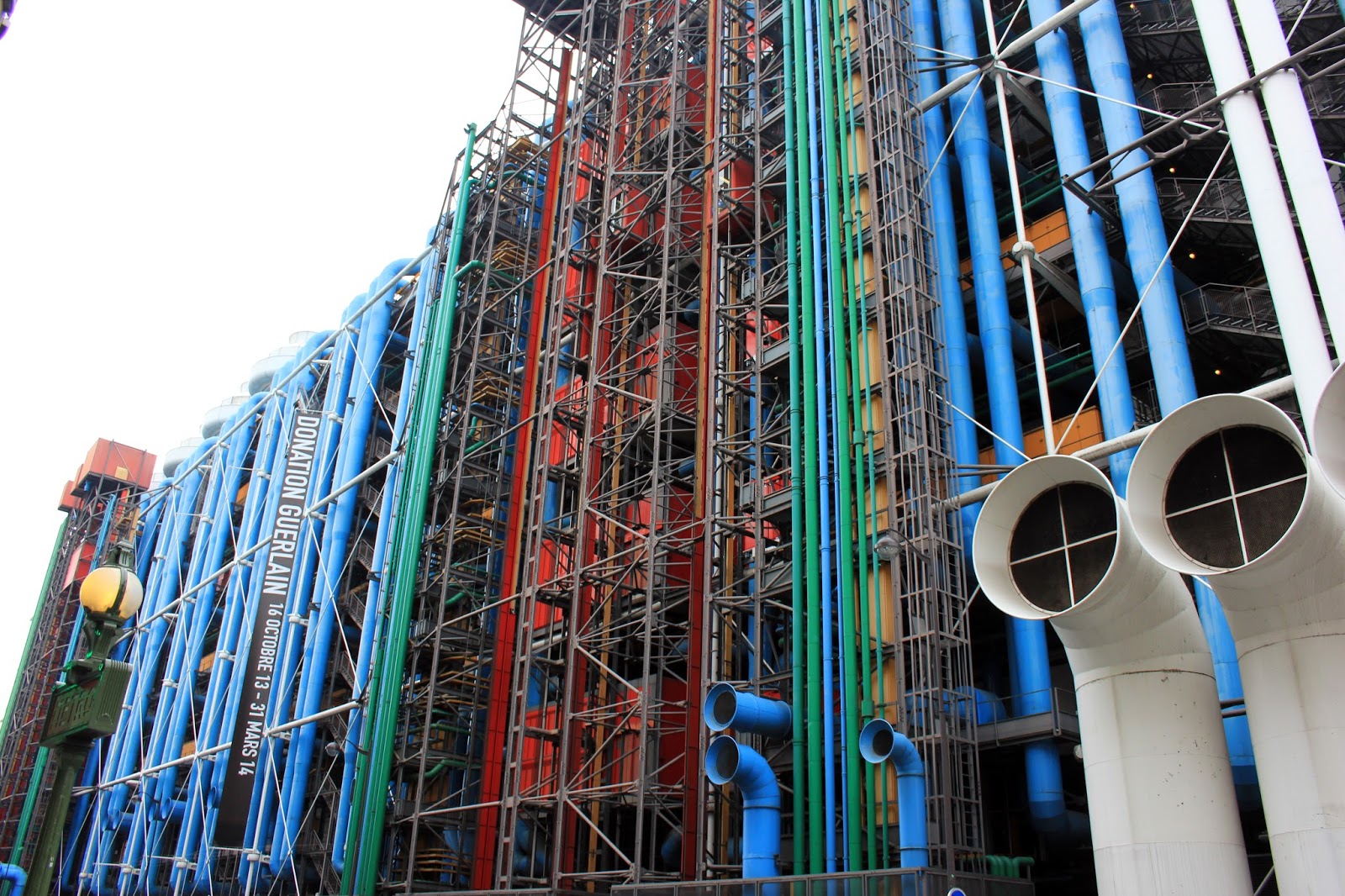
Centre Georges Pompidou demonstrates the danger of meta:

pompidou-center

(Image from fun-en-bulle-castbd.blogspot.com)

The Parisian art museum built in 1977 is meta-architecture because it exposes elements of a building that are usually hidden, placing them on the exterior. It teaches us to see a building as a material object made up of structure, support, pipes, wires. In the picture below some pipes are painted different colors, suggesting different systems, thus “exposing the device,” showing us how the building works. Very interesting, no doubt. So what’s the problem?
Continue reading