 It might seem that I am trying to demonstrate the unreality of reality. Many others have done so, including Taoists, Hindus and Buddhists. Jews, Christians and Muslims, following Plato’s lead, think God’s ideal realm is realer than this world. Religious people are not the only ones to call reality an illusion. Ludwig Wittgenstein said, “The limits of my language mean the limits of my world,” and Jacques Derrida suggested, “There is nothing outside the text.”
Instead, my purpose is to show that the distinction between fiction and reality is artificial, created by language. Fiction and reality both exist as concepts within the same linguistic structure; symbols and stories are essential parts of our reality system. Everything we talk and write about is fiction, yet fiction has material existence, therefore it is real. Separating fiction from reality only drives us, like Don Quixote, to narrative madness.
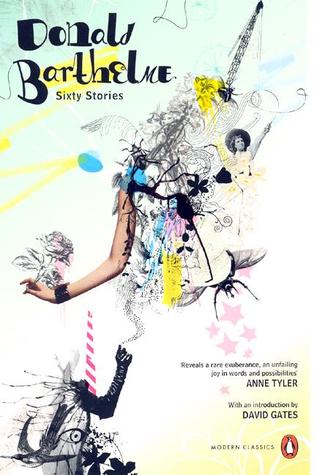 This introduction to Donald Barthelme’s short story “The School” is non-fiction. Non-fiction means “not fiction.” Fiction, as you have learned, is a story that is “not true.” In other words non-fiction, on a linguistic level, is “not not-true.” This means, logically, when you cancel out the negatives, that the non-fictional information I am about to give you, is — I am very pleased to say — true.