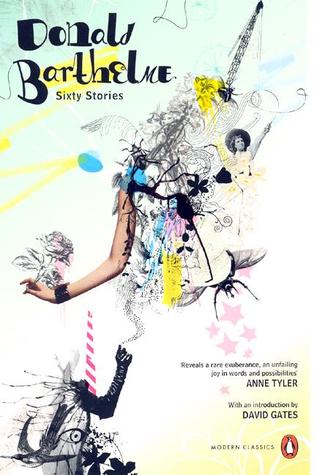
 This introduction to Donald Barthelme’s short story “The School” is non-fiction. Non-fiction means “not fiction.” Fiction, as you have learned, is a story that is “not true.” In other words non-fiction, on a linguistic level, is “not not-true.” This means, logically, when you cancel out the negatives, that the non-fictional information I am about to give you, is — I am very pleased to say — true.
Who is the Monster at the End of The Book? It’s Not Grover, Dear Reader.
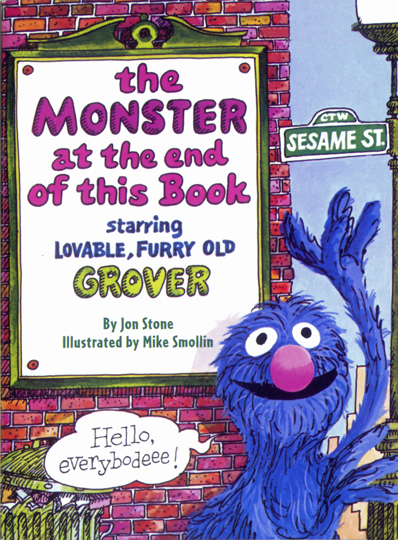
On the cover of The Monster at the End of This Book Starring Lovable, Furry Old Grover, Grover breaks the narrative fourth wall and smiles and waves at the readers, a bit shyly, saying “Hello, everybodeee!” No mistaking that voice! Then the title page, which readers always turn past quickly, like Grover, who is already peeling back one corner of the illustrated page (drawn on the real paper), saying, “This is a very dull page. What is on the next page?”
David Hockney’s Metaphotocollage
The metaphotocollage (how about that word!) by David Hockney, “Luncheon at British Embassy, Tokyo, Feb. 16, 1983,” is meta because it upsets several assumptions about photographs, refers to the photographer, and captures the act of taking photographs.

Penetrate the Power of Words: Defining Sex
Words shape thoughts. For example, what is the defining act of sex? When have you moved from making out and heavy petting to doing the nasty? Most people would say the act of penetration. And who penetrates? A man! And who receives? A woman! What does this imply about the power relationship?
Dangerous Editors: Choderlos de Laclos’ Les liaisons dangereuses
 Les Liaisons Dangereuses by Choderlos de Laclos may not be what first comes to mind when you think of metafiction, but the the book is metafictional because it troubles the distinction between fiction and nonfiction. The book is told through a series of letters — the epistolary method — a device which gives a novel the illusion of being a collection of historical documents, as in Samuel Richardson’s Pamela (whose title page pronounces the book to be “A narrative which has its foundation in truth and nature”) and Daniel Defoe’s Robinson Crusoe (“written by himself” — as with Pamela, the real author’s name is not included on the title page).