The simulation theory takes the theory of mind a step further. Instead of trying to guess what others are thinking, we humans put ourselves in the other’s shoes, as the saying goes, in order to feel what the other is feeling.
How Hominids Manage Tricky Social Relations: The Theory of Mind and Mindreading Games
(An extract of my book Narrative Madness, edited by Katie Fox, which you can get at narrativemadness.com or on Amazon.)
The Machiavellian Prince of Primates

Many other species are social as well, so why didn’t they develop sophisticated systems of symbolic communication? Primate societies developed language because of the exaggerated complexity of our manipulative social interactions. The MIT Encyclopedia of Cognitive Sciences says that “primate social relationships have been characterized as manipulative and sometimes deceptive at sophisticated levels” (Wilson and Kiel). Writes Kerstin Dautenhahn, biologist and professor of computer science, paraphrasing Frans de Waal, “Identifying friends and allies, predicting behavior of others, knowing how to form alliances, manipulating group members, making war, love and peace, are important ingredients of primate politics.” A hominid skilled at manipulation would be better suited than its more submissive counterparts to win resources, sex and power.
Narrative Madness: Humans are the Stories They Tell about Themselves
What distinguishes humans from the animals are statements like “What distinguishes humans from the animals . . . .” In other words, the only thing that separates us from animals is an ongoing narrative that says we are not animals. The human is the animal that pretends that it is not. Most of our social rules are designed to hide our animal natures from ourselves: shaving our beards, using deodorant, wearing clothes, buying prepackaged meat, using silverware, not fighting over food, not farting or fucking in public.

Edwin Landseer, Scene from A Midsummer Night’s DreamContinue reading
Do Animals Tell Stories?: The Narrative Abilities of Animals
All narratives are patterns, but all patterns aren’t narratives, unless they suggest character, setting and action. Animals look for and find patterns. So, we should ask, do animals produce narrative?
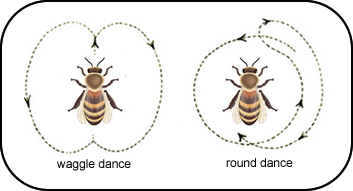 Well, yes. The language of the bees still astounds scientists. Bees communicate symbolically in the form of a dance, passing on information about distance, difficulty and value of potential food sources. They dance in the present about past experiences in order to exploit future resources. Other bees do their little dance, explaining alternative sources of pollen, and then somehow the bees come to a decision about the best source. An insect, a creature from the lower orders – far down the hierarchy of animals (at the top of which we have placed ourselves) – can clearly tell stories and make value judgements about them. (Read all about it in biologist and sociologist Eileen Crist’s article “Can an Insect Speak? The Case of the Honeybee Dance Language” [2004].) The idea is so astounding that I don’t even know what to do with it. I will just move on to dogs, with whom I can converse more easily.
Narrative Madness: What is Narrative and How Do Our Conceptions of It Warp Our Understanding?
Narrative is a Very Limited Selection of So-Called Facts
 Since language is inherently narrative and its stories strongly influence our perception and actions, it is important to understand what narrative is.
The word “narrative,” from the French narratif, began appearing in the English language in the early 1500s, referring to parts of a legal document laying out “alleged or relevant facts” (Oxford English Dictionary). The word “alleged” reminds us that all facts may be challenged in a court of law. A fact is not a fact until it has been proved. Even then, a legal decision is open to appeal. In many fields, including science and history, “facts” are frequently disputed and reinterpreted.
The Myth of Myths: The Development of Human Culture through Mythmaking
“We know the scene.” The strange one begins to tell a story by the fire, mumbling, miming, chanting, swaying, and no one pays attention, but she keeps going and there is something about the quiet insistence of her song as it grows louder that makes the old woman, grinding ocher, look up. The men, scraping hides, one by one let the flint fall and find stones to sit on. Others notice the group and gather.
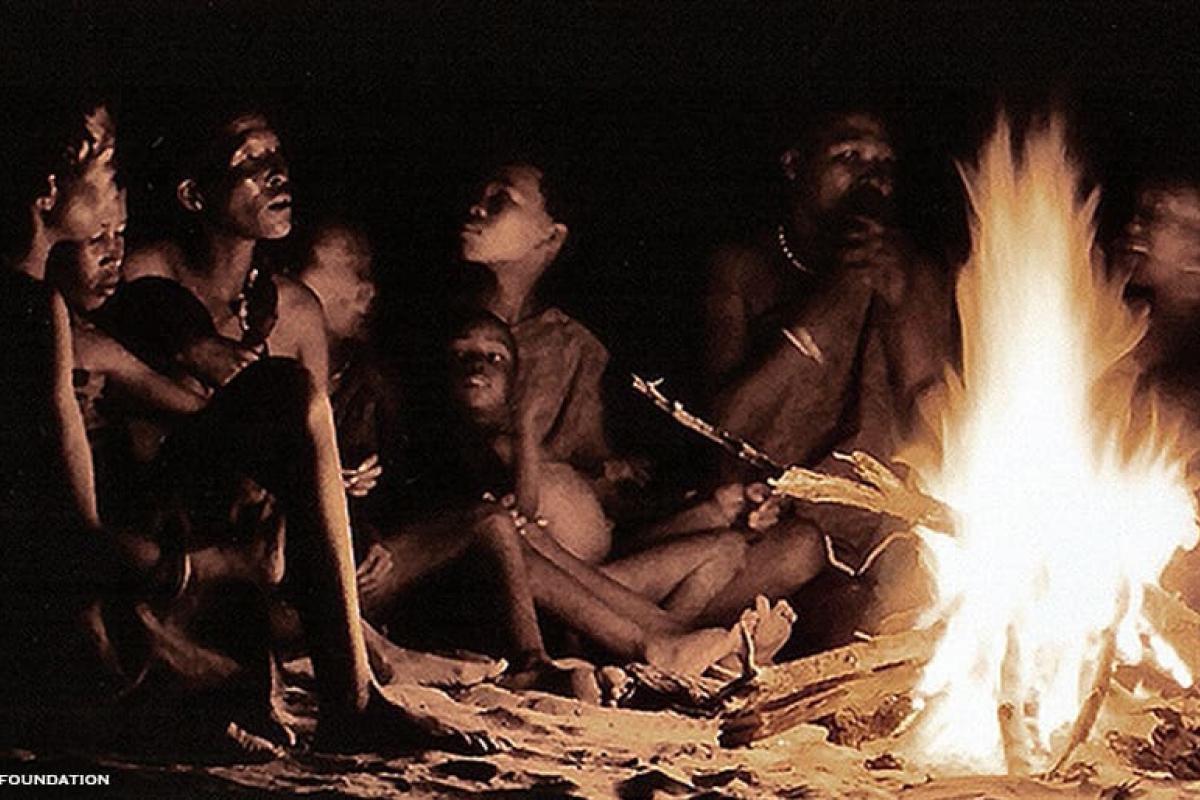
They were not like this before; the story has brought them together. In the warmth of the fire, they lean toward the storyteller, who is one of them, yet an outsider: she has gone away for a long time, she is crippled, or she is crazy. Perhaps she is a man.16 She tells them of the beginning of the world, the birth of the first people, the coming together of a culture, the origin of language and storytelling – a tale they all know, but only she has “the gift, the right, or the duty to tell” it (43), writes French philosopher and literary critic Jean-Luc Nancy in “Myth Interrupted” (1991).
Narrative Madness: The Influence of Narrative Language on Perception and Behavior
You’re crazy! By that, I mean you cannot easily distinguish fiction from reality, and you let delusions brought on by narrative influence your perception and behavior. Like Don Quixote, you wander lost through clouds of story. The madness, however, is generative because narrative language is the principle means by which humans understand and reshape ourselves and our world.
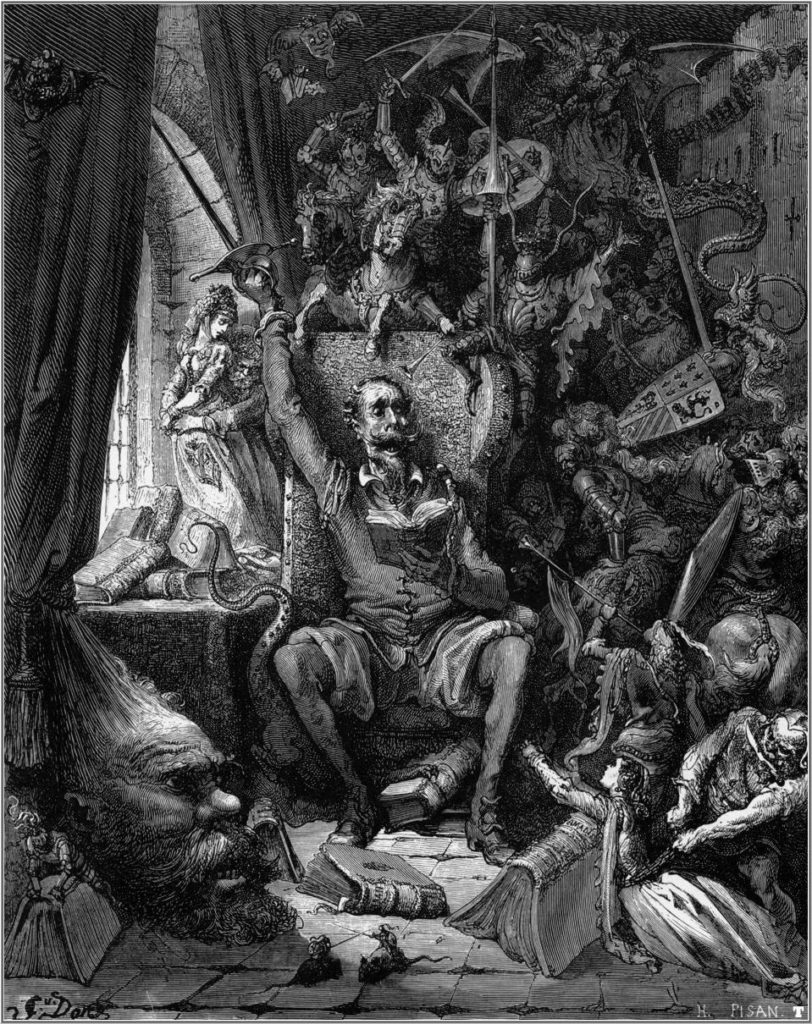
Gustave Doré
A Self-Reflective Song: “Your Song” by Elton John and Bernie Taupin
Songwriters love to write songs about songs, meditating on the meaning and power of music. You can listen to my playlist Metamusic: Songs about Songs on RDIO as you read about “Your Song,” lyrics by Bernie Taupin and music by Elton John, the first of a series of posts on metamusic.
The song begins “It’s a little bit funny this feeling inside.” The feeling, of course, is love. “I don’t have much money,” John sings, “but boy if I did / I’d buy a big house where we both could live.” The songwriters, longtime collaborators, may not have had much money when they wrote the song, but it became their first pop hit and is now worth a fortune, enough to buy two or three houses.
The Reader as Screenwriter, Director, Set Designer, Lighting Designer, Casting Director, Costume Designer and Actor (Part III)
(The results of an experiment, described in the first and second parts of this series about the writerly reader. A condensed version of this study appears in my book Narrative Madness, which you can acquire at narrativemadness.com or on Amazon. I have sometimes altered spelling, punctuation and capitalization in the responses to make them more accessible.)
The Conflict
Twenty respondents (71%) gave their longest answers to the question “What happened?”, sometimes two, three, four and five times longer. Obviously, this is the part of the story that matters.
The Reader as Screenwriter, Director, Set Designer, Lighting Designer, Casting Director, Costume Designer and Actor (Part II)
(The results of an experiment, described in the first part of this series about the writerly reader. A condensed version of this study appears in my book Narrative Madness, which you can acquire at narrativemadness.com or on Amazon. I have sometimes altered spelling, punctuation and capitalization in the responses to make them more accessible.)
The Setting
When we read a story others have read, we assume everyone has had a similar experience. However, the range of responses in this experiment demonstrates how differently readers envision a narrative. The amount and specificity of detail shows how thoroughly readers inhabit a scene, even one that is brief. As you read the rich responses below, feel free to reimagine these reanimations of my story. After all, it is your birthday!